In the experience society we live in today, transmission of knowledge is most effective when lived: we remember the facts and figures and works of art that felt real to us, and not solely something we read on a wall in an exhibition space. Because every exhibition is different, there is no formula that makes a good exhibition into a captivating experience. With every exhibition we make, we thus opt for a different approach. These are some of the most successful forms of scenography we have tried, if you’d ask us.
Turning exhibits into experiences
On scenography
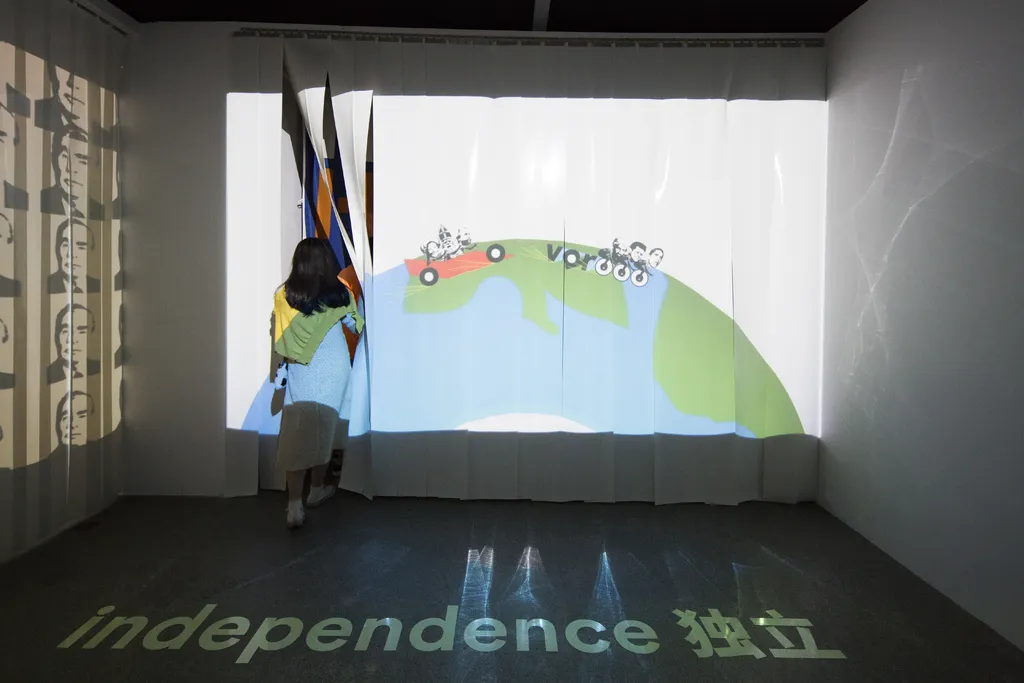
Why we design (2019): Break the exhibit
In 2019, thonik celebrated 25 years of design with an exhibition at the Power Station of Design in Shanghai. Over 150.000 visitors walked through a maze of curtains on which 25 years of design was projected. The setup allowed visitors to, quite literally, walk through time and offered fun encounters between the ones walking and the ones watching. The scenography of the exhibit forced people to interact with the work and with each other.
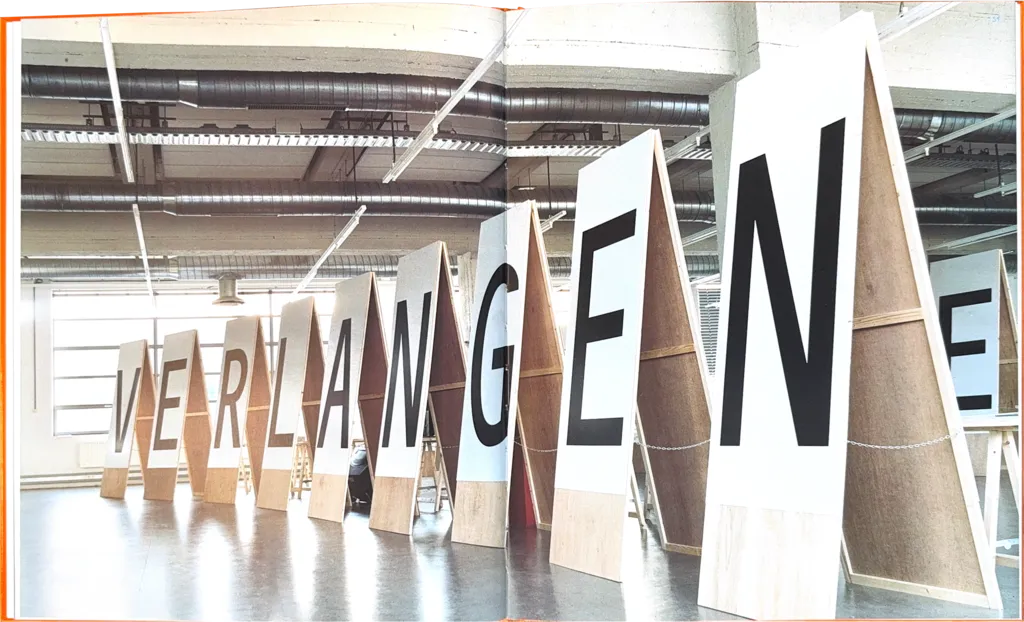
Verlangen naar Architectuur (1999): Surprise people
Verlangen naar Architectuur (Longing for architecture) was an exhibition in Architectuur Centrum Eindhoven, in 1999, before the dawn of the internet, that welcomed its visitors into an almost empty hall. The words VERLANGEN (Longing) and ARCHITECTURE (Architecture) faced them, each letter printed on an A-board of over two metres tall, welcomed them. Upon walking past these letters, on the backside of the A-boards, the actual architecture ideas and objects were displayed.
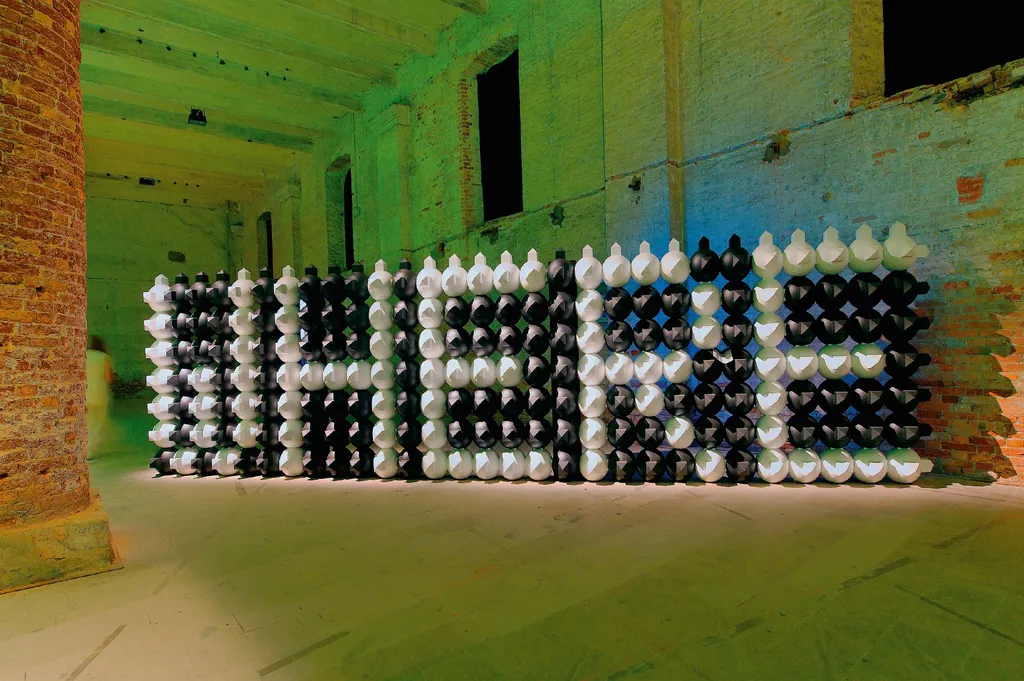
Biënnale Venetië (2009): Break things open
When designing the graphic identity of the 11th International Architecture Biennale in Venice, we chose to use a globe and the archetypical shape of the house to build a visual identity. We made the ball and the house into black and white three-dimensional objects that shaped the scenography of the Corderia: the whole space was kept open, only divided by wall-like structures with curatorial comments by Aaron Betsky visible in black and white balls. The openness of the space gave the display of architecture new meaning.
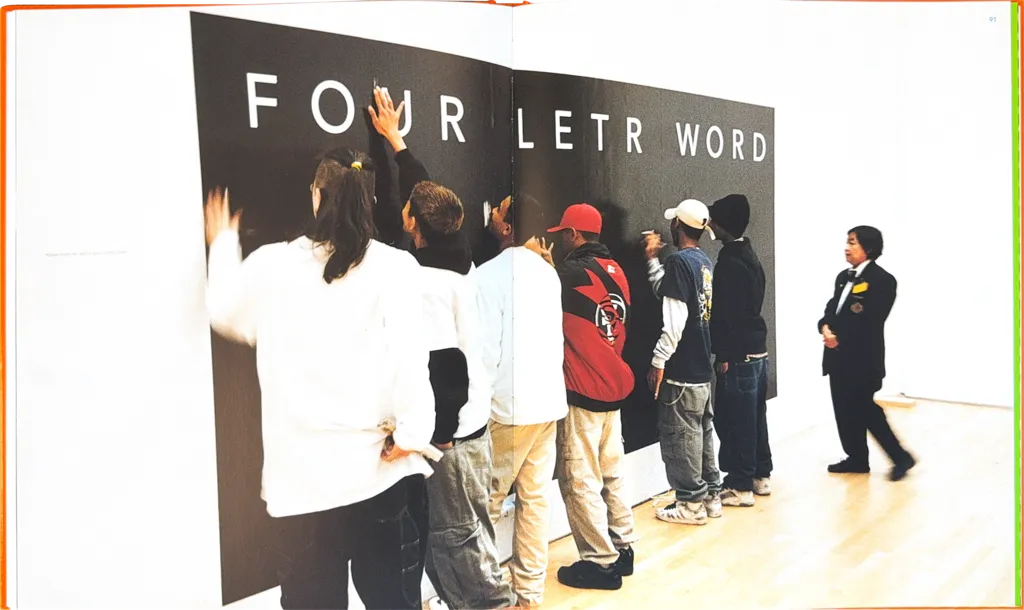
Four Letr Word Find F*ck Face (2001): Interact with your audience
The English language has approximately 460.000 four letter combinations and about 4900 actual words, ‘f*ck’, ‘love’, and ‘kiss’ being one of the most known and used ones. When the is added to it, that number increases even more. The interactive artwork 'Four Letr Word Find F*ck Face', developed by thonik and showcased in SFMoma, consisted of all of these combinations, printed in black heat-sensitive ink on a black background, giving visitors the possibility to look for their favourite word(s) by touching the work with their hands.