thonik has been making graphic design part of the built environment over the past 30 years. Having worked together with some of the best architects (Frank Gehry), engineers and building material suppliers (Trespa) in the world, we know how interdisciplinary collaboration is essential to shaping the built environment – and making graphic design big in the process.
Design for makers
On collaborative design
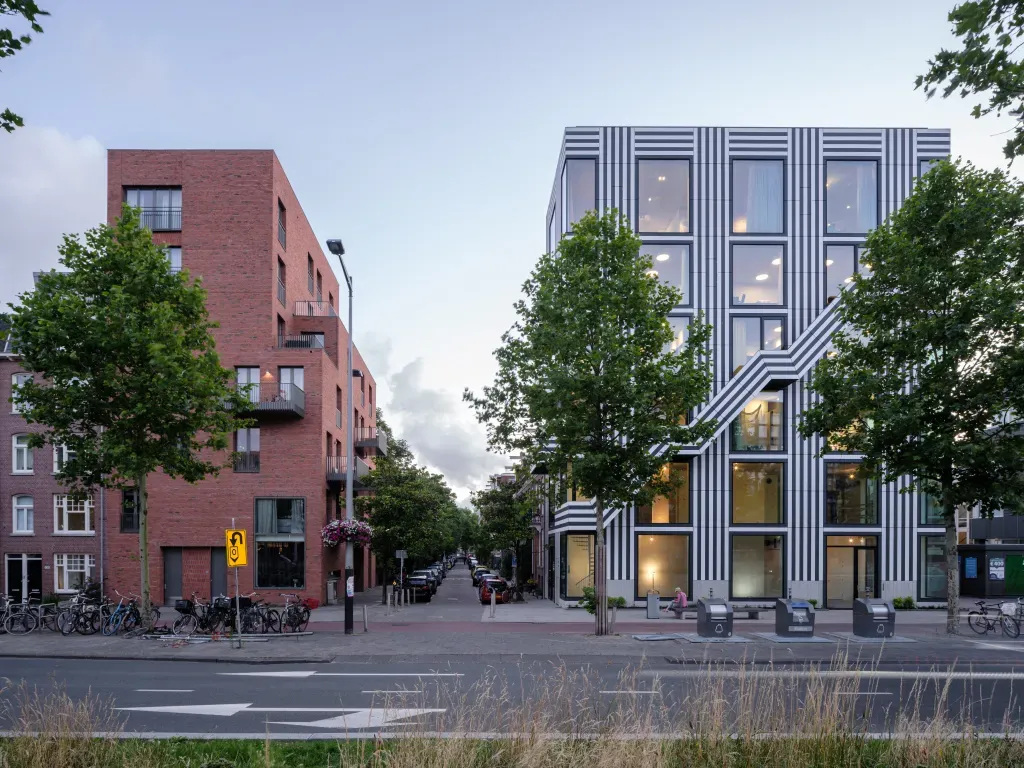
Our very own office may be the most striking and most recent example of that practice: a combination of architecture and graphic design, thonik’s office space is a prime example of what the urban enlivenment could look like if creatives got to design their own workspace. We collaborated with MMX-architecten to design and develop, in the words of the ‘Architecture in the Netherlands, Yearbook 2020-2021’, “a striking building with a black-and-white striped facade”.
To do so, we collaborated with Trespa, the leading innovator in the field of architectural panel materials. Their Trespa Meteon Lumen was essential to the facade of our building and our collaboration made our studio a prime example and learning case of architectural experimenting. The studio became a meeting place where Trespa was able to showcase and explain how urban landscapes can be enlivened with graphic facade cladding.
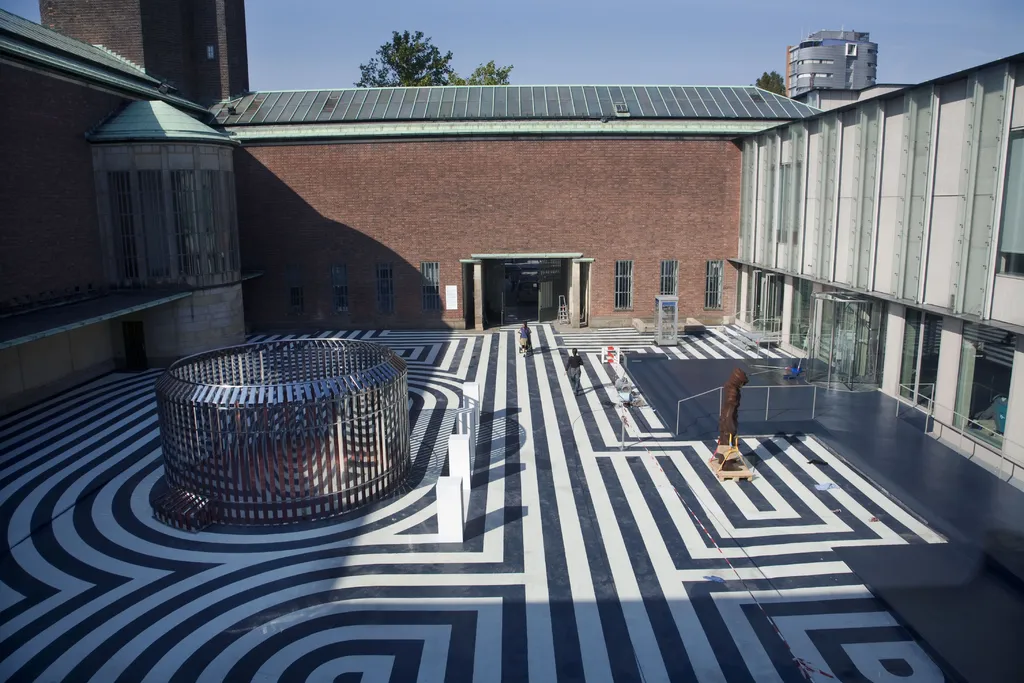
In Rotterdam, in the courtyard of the Boijmans Museum, we collaborated with German artist Olaf Nicolai, who made the artwork Apollo, a.k.a. the ‘soccer pitch’. The name of the work, spelled out in the font we developed for Boijmans, was painted as a super graphic on the floor surrounding the artwork, making the steel bars of this ‘soccer cage’ reflect the soccer players within and the black and white line pattern outside of the artwork.
Doing so required close collaboration with the artist and the museum and ensured a surprising museum experience visitors are likely to remember.
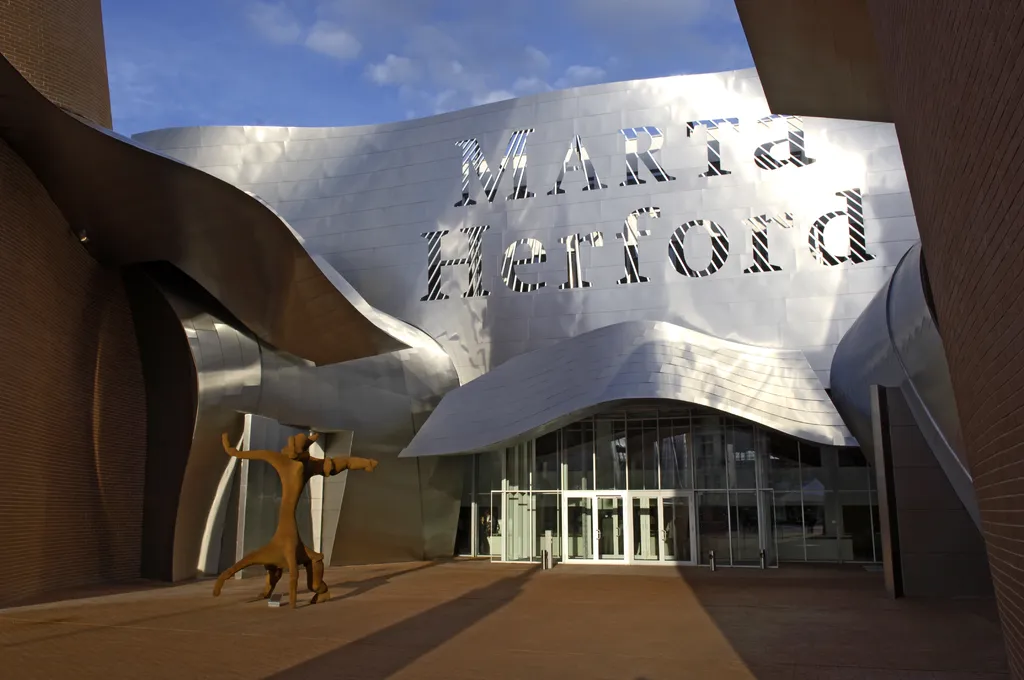
At the Museum MARta Herford, we had the chance to collaborate with the world famous architect, Frank Gehry. Gehry had been given permission to build the museum around an existing structure, as long as there would still be enough light entering the existing office buildings.
To make that happen, thonik developed a typographic cut-out into the titanium of the facade, ensuring that the identity of the museum literally becomes part of the building, while simultaneously providing enough light for the offices behind the facade. In order to make sure that the structure upholding the facade would not interfere with the typography and matches with the overall structure, we collaborated intensively with both the architect and the construction company.
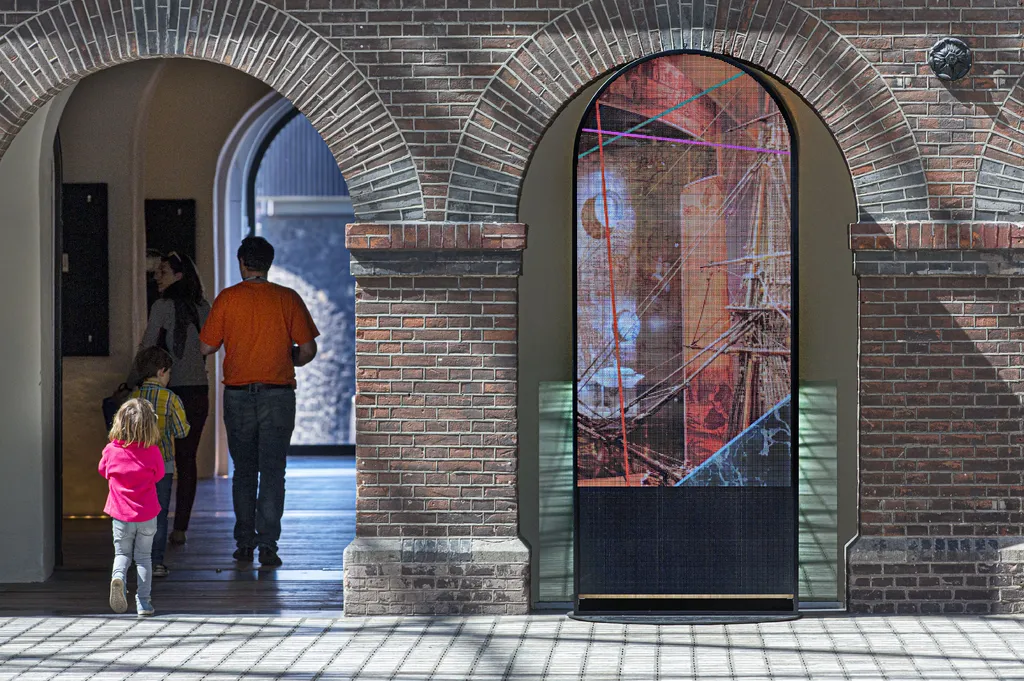
Finally, for Scheepvaartmuseum Amsterdam, we shaped the communication digitally and analogue by adapting the regular shape and size of display screens in the museum to match our digital signage, and vice versa. Screen manufacturer Little LED helped us realise screens that matched the architecture’s shapes, and we developed motion graphics that match those screens, their shapes and the architecture.